In this article
A fridge that runs but stays warm is one of the most common calls we get, especially in summer. Sometimes the fix is a thermostat that was knocked down while cleaning. Sometimes it is a part that needs a technician. This guide walks through both, in the order you should check them.
Check these first: two minutes
-
1
Is it getting power?Look for the inside light and listen for the motor. If both are dead, check the plug, the socket and the breaker.
-
2
Look at the thermostatDials get turned by accident when shelves are cleaned. Set it to the middle, or 3 to 4 °C on a digital display.
-
3
Does the door close properly?Close the door on a sheet of paper. If it slides out easily, the seal isn’t holding.
-
4
Are the vents blocked?Food pushed against the back wall can block the cold air coming from the freezer. Leave a hand’s width clear.
The 7 most common causes
1. The thermostat is set wrong, or has failed
If the setting is right but the fridge never switches its motor on, or never switches it off, the thermostat itself may be faulty. It is a common part and quick to replace.
2. Dirty condenser coils
The coils at the back or underneath release the heat taken out of the fridge. When they are covered in dust, the fridge runs for longer and cools less. In Kuwait’s dust, this happens faster than people expect.
3. Blocked air vents inside
In most modern fridges, cold air is made in the freezer and blown into the fridge through a vent. Block it with a tray or a bag and the fridge section warms up while the freezer stays cold.
4. A worn door seal
A torn or loose seal lets warm, humid air in all day. You will often see condensation or frost forming near the door. Seals can be replaced without changing the door.
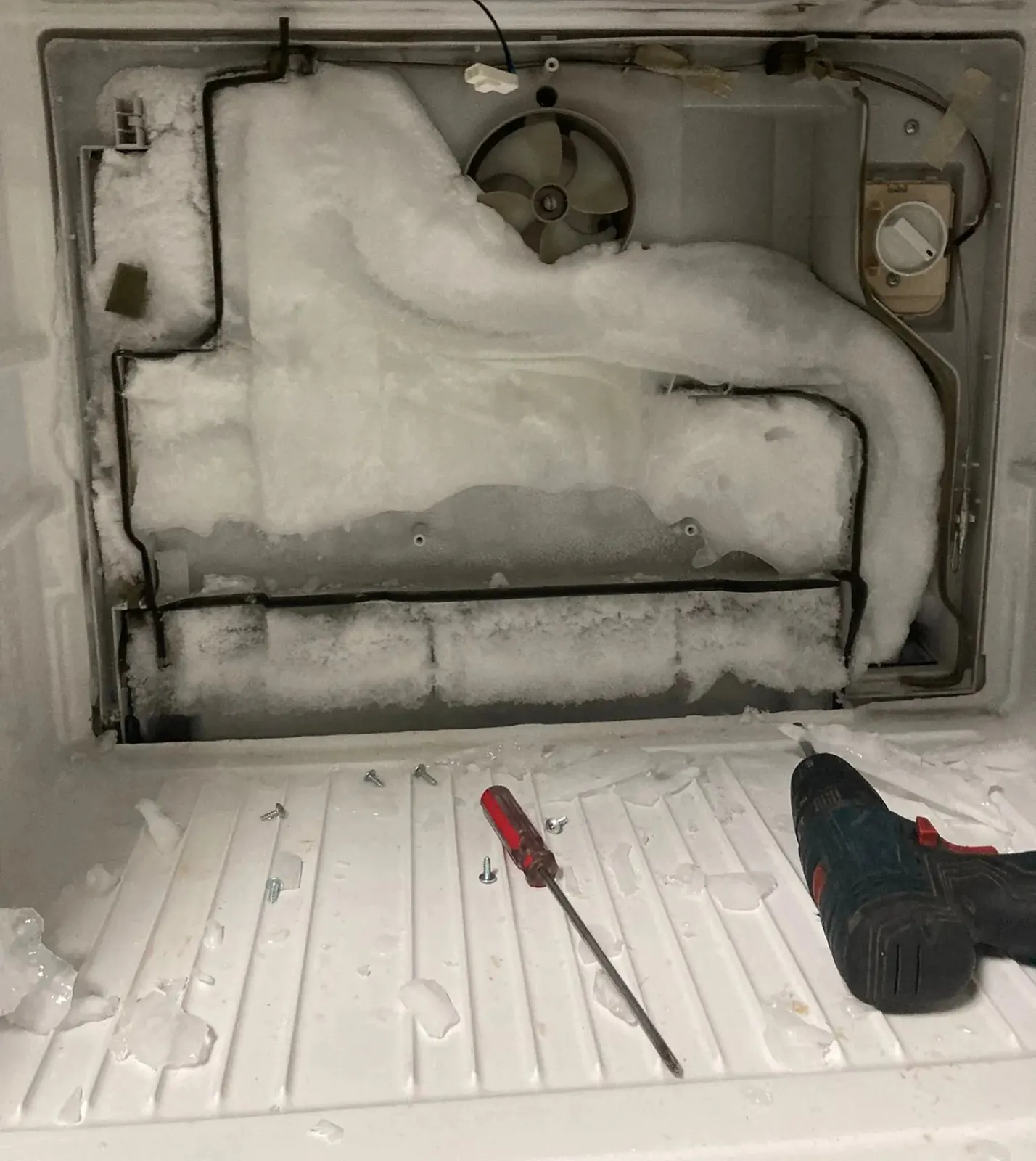
5. A defrost fault (no-frost fridges)
If you see a layer of ice on the back wall of the freezer, the automatic defrost isn’t working. The ice blocks the airflow, so the fridge goes warm. The cause is usually the defrost heater, timer or sensor.
Fridge repair
Not cooling, gas recharge, compressor, thermostat, noise, water leaks and no-frost faults.
- Not cooling
- Gas recharge
- Compressor
- No-frost
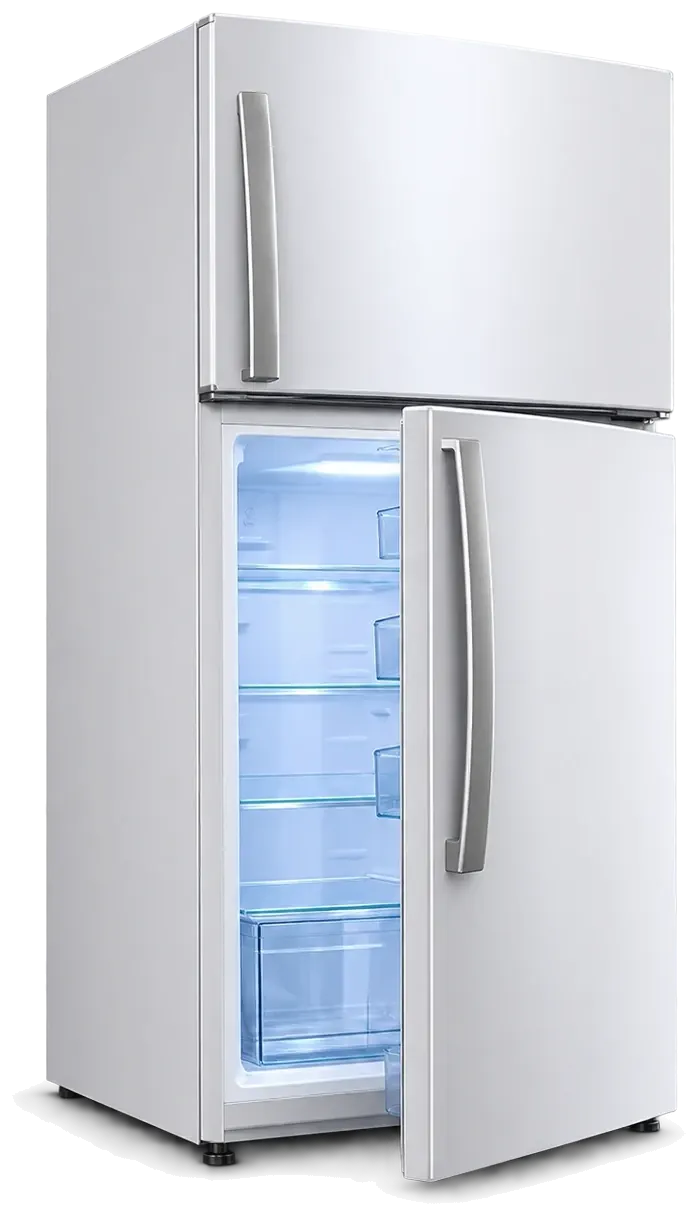
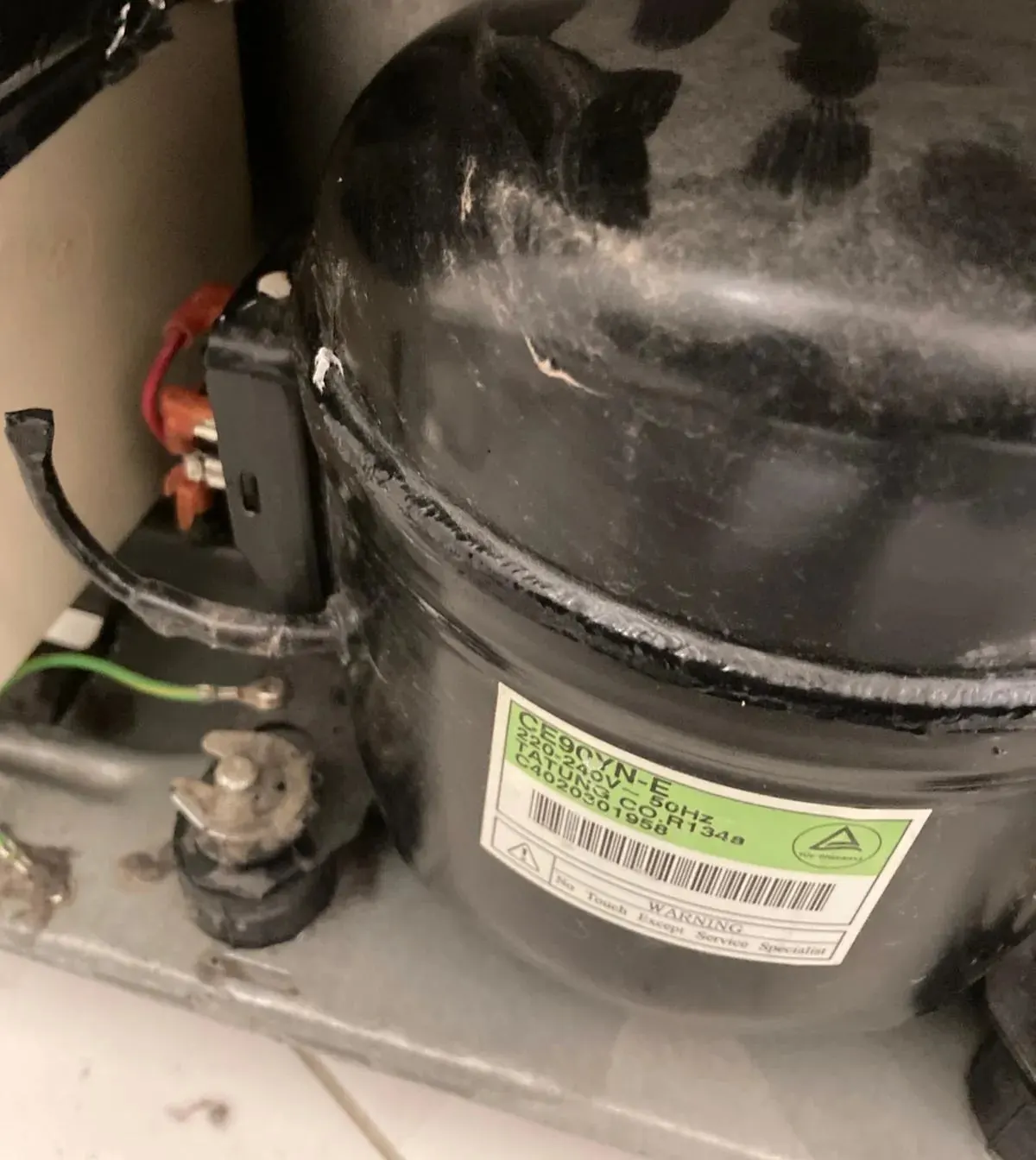
6. The compressor won’t start
A click every few minutes, then silence, usually means the compressor is trying to start and can’t. Often the fault is the starter relay or capacitor rather than the compressor itself, which is good news: they are small parts.
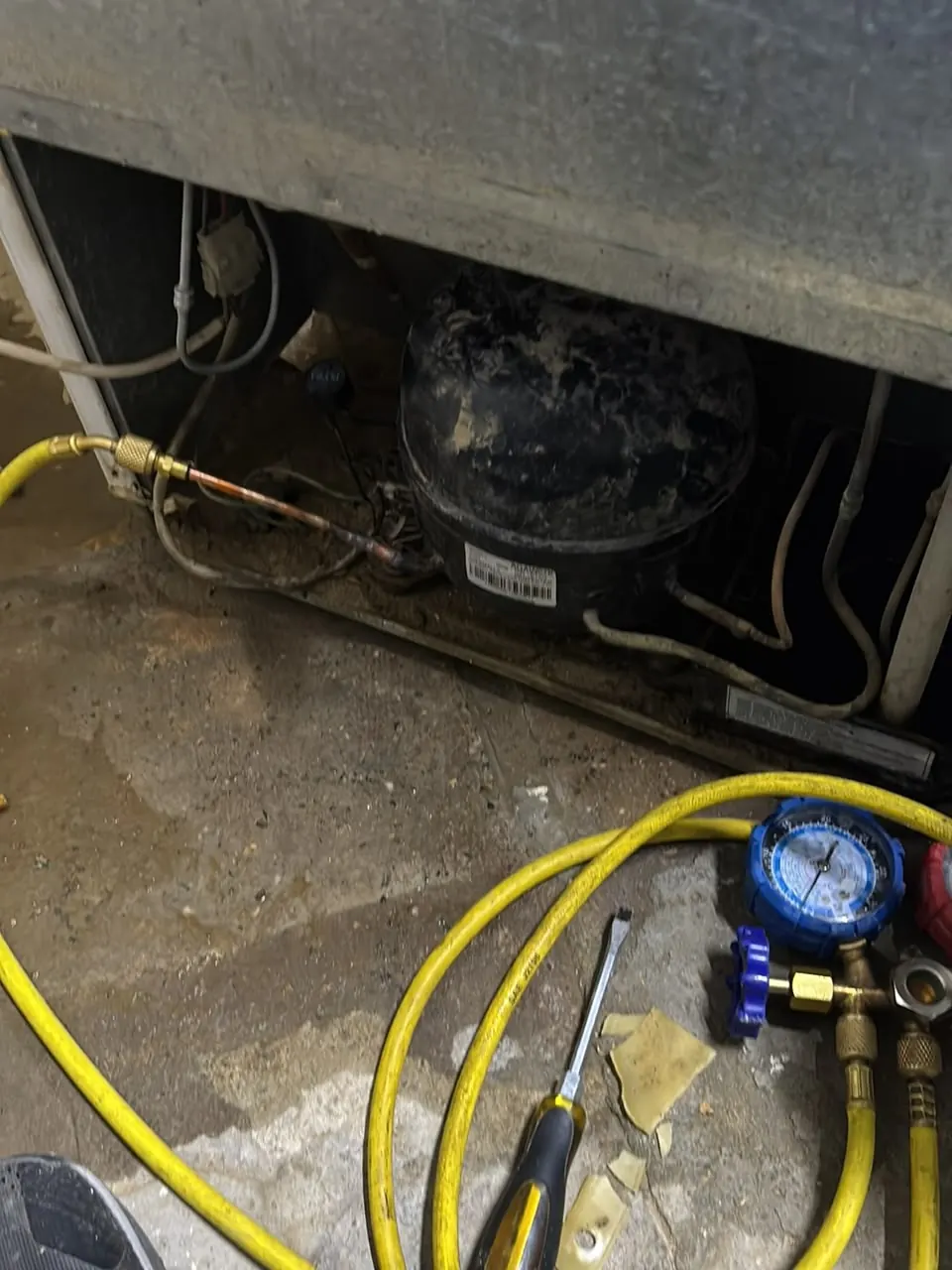
7. Low gas from a leak
A fridge doesn’t use up its gas. If it is low, there is a leak somewhere. The right repair is to find and seal the leak, then recharge to the correct pressure. Recharging without fixing the leak only buys a few weeks.
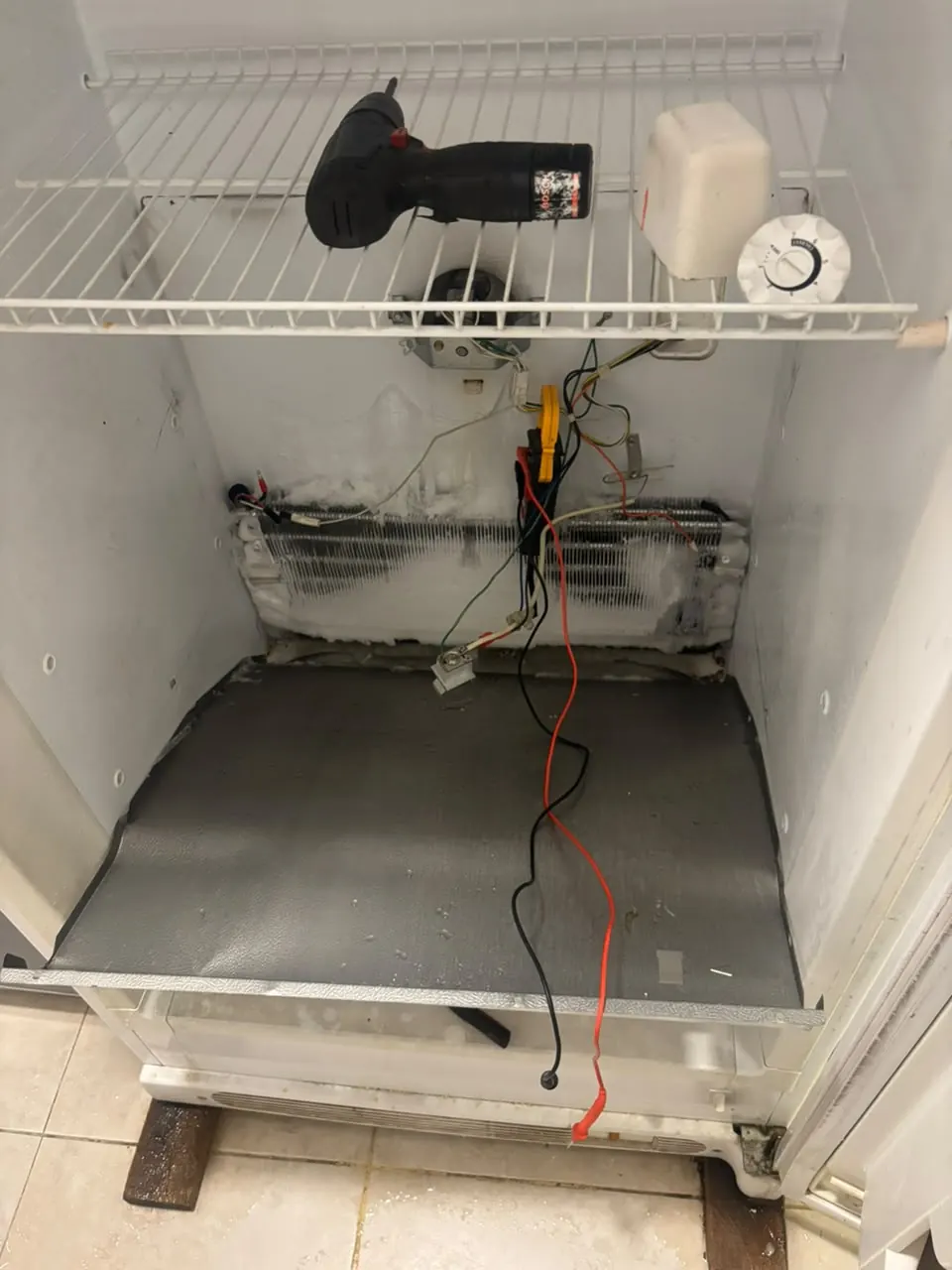
What you can check, and when to call
| What you notice | Likely cause | Safe to check yourself? |
|---|---|---|
| Warm, silent, no light | Power, plug or breaker | Yes |
| Light on, but no cold at all | Thermostat, relay or compressor | Check the setting only |
| Freezer cold, fridge warm | Blocked vent or defrost fault | Clear the vent; if ice on back wall, call |
| Runs non-stop, still warm | Dirty coils or low gas | Clean the coils; if no change in a day, call |
| Clicking every few minutes | Starter relay or compressor | No, call a technician |
Keeping food safe while you wait
Keep the doors closed. A closed fridge stays cool for a few hours, and a full freezer for longer. Move milk, meat and anything cooked into a cool box with ice if the repair will take more than a couple of hours.
Questions people ask
How long should a fridge take to get cold after I switch it on?
Usually several hours to reach full temperature, longer if it is packed with warm food. If it is still warm the next day, something is wrong.
Can I recharge the gas myself?
No. It needs gauges, the correct gas and a leak repair first. Done wrongly, it can damage the compressor.
Is it worth repairing an older fridge?
Often yes, if the fault is a thermostat, relay, seal or defrost part. A technician can tell you honestly when a repair isn’t worth it.